



Follow Us!
Patient stories, informative videos and much more on our social media accounts
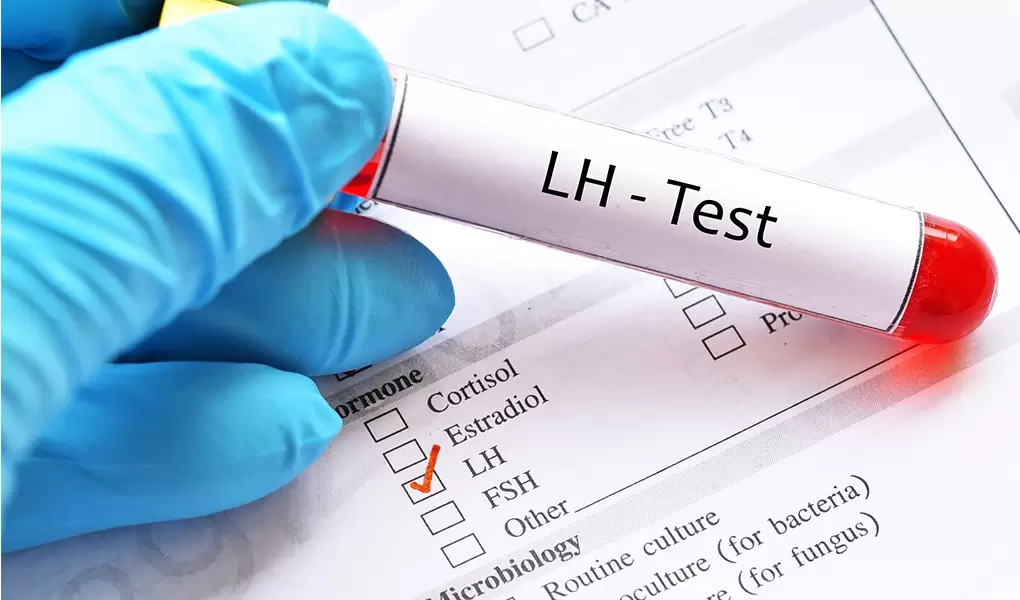
Luteinizing Hormone (LH) is one of the key hormones that regulate the human reproductive system in both women and men. It plays a central role in ovulation, hormone production, and fertility. Abnormal LH levels are commonly investigated during infertility evaluations, menstrual irregularities, and hormonal disorders.
LH is secreted by the anterior pituitary gland, a small but powerful structure located at the base of the brain. Together with other pituitary hormones such as FSH (Follicle-Stimulating Hormone), TSH, GH, and prolactin, LH helps regulate growth, metabolism, sexual development, and reproductive function.
Reproductive hormone regulation works through a complex hormonal loop known as the hypothalamic–pituitary–gonadal axis. In this system, the hypothalamus releases GnRH (Gonadotropin-Releasing Hormone), which stimulates the pituitary gland to secrete LH and FSH. These hormones then act on the ovaries in women and the testicles in men to carry out their functions.
LH has distinct but equally critical roles in women and men.
In women, LH is essential for:
A sudden rise in LH levels, known as the LH surge, occurs in the middle of the menstrual cycle. This surge causes the mature egg to be released from the ovary. Without this process, ovulation does not occur, fertilization cannot take place, and pregnancy becomes impossible.
In men, LH stimulates the Leydig cells in the testicles to produce testosterone. Testosterone is responsible for:
Low or high LH levels in men may indicate testicular dysfunction or hormonal imbalance.
The LH test measures the amount of luteinizing hormone in the blood or urine.
The LH test is frequently ordered as part of infertility investigations for both female and male patients and is usually interpreted together with FSH, estrogen, progesterone, and testosterone levels.
Many people searching online ask “LH test means what?” In simple terms, an LH test helps determine whether ovulation is occurring normally, whether hormone levels are balanced, and whether fertility-related conditions may be present.
The timing of the LH test depends on the purpose of the evaluation:
For blood testing in women, LH is often measured on day 2–3 of the menstrual cycle unless ovulation timing is being assessed.
Normal LH levels vary based on sex, age, and menstrual phase. Reference ranges may differ slightly between laboratories, but general values are as follows:
Understanding these values is crucial before labeling LH as high or low.
An elevated LH level may indicate several medical conditions. One of the most common reasons for high LH levels in women is Polycystic Ovary Syndrome (PCOS).
Many patients search for “treatment for high LH levels in females” or “how to reduce LH levels in females naturally.” The answer depends entirely on the underlying cause.
There is no direct medication that specifically targets LH reduction. Treatment focuses on addressing the underlying condition.
In women with PCOS, lifestyle modifications may help:
Certain supplements, such as inositol and omega-3 fatty acids, have shown potential benefits in supporting hormonal balance in PCOS patients.
These approaches are often discussed in searches like “how to decrease LH levels in females naturally” or “treatment for high LH levels naturally.”
Low LH levels are less common but may indicate dysfunction in the hypothalamus or pituitary gland.
Low LH levels can result in:
The LH surge is the key event that triggers ovulation. Ovulation typically occurs 24–36 hours after the LH peak.
Urine ovulation tests detect this LH rise and are widely used by couples trying to conceive. A positive test indicates the most fertile window, making it the ideal time for sexual intercourse.
Eggs survive approximately 24 hours after ovulation, while sperm can survive up to 48 hours. Therefore, intercourse during this period significantly increases pregnancy chances.
LH and FSH are known as gonadotropic hormones and work together to regulate reproduction.
Because of this interaction, LH should never be evaluated alone. Interpreting LH together with FSH provides a much clearer picture of reproductive health.
An LH (Luteinizing Hormone) test measures the level of luteinizing hormone in the blood or urine. It helps determine whether ovulation is occurring normally in women and whether testosterone production is adequate in men. The LH test is commonly used in infertility evaluations, menstrual irregularities, and hormonal imbalance investigations.
Normal LH levels vary depending on age, sex, and menstrual cycle phase. In adult women, LH levels are usually between 1–18 IU/L in the follicular phase and can rise to 20–80 IU/L during ovulation. In adult men, normal LH levels typically range from 1–9 IU/L.
High LH levels in females are most commonly associated with Polycystic Ovary Syndrome (PCOS). Other causes include ovarian failure, menopause, ovarian cysts, pituitary disorders, genetic conditions, and prior chemotherapy or radiotherapy.
Lowering LH levels naturally depends on the underlying cause. In women with PCOS, lifestyle changes such as regular exercise, weight management, low-glycemic nutrition, and improving insulin resistance may help reduce LH levels. Supplements like inositol and omega-3 may support hormonal balance under medical supervision.
Low LH levels may indicate hypothalamic or pituitary dysfunction. Chronic stress, eating disorders, excessive exercise, high prolactin levels, and certain medications can suppress LH production. Low LH may lead to ovulation problems in women and low testosterone or sperm production in men.
In women, LH blood tests are usually performed on day 2–3 of the menstrual cycle unless ovulation timing is being evaluated. Urine LH tests (ovulation tests) are used mid-cycle to detect the LH surge. In men, LH testing can be done on any day.
Yes. LH is essential for ovulation. The LH surge triggers the release of a mature egg from the ovary. Without a proper LH surge, ovulation does not occur and pregnancy cannot happen naturally.
LH and FSH work together to regulate the reproductive system. FSH stimulates follicle growth, while LH triggers ovulation. Evaluating both hormones together provides a clearer understanding of fertility status than assessing either hormone alone.
LH (Luteinizing Hormone) is a cornerstone of reproductive health in both women and men. Whether evaluating infertility, ovulation problems, or hormonal imbalances, understanding LH levels and their causes is essential.
High or low LH levels are not diagnoses on their own. Proper interpretation requires a comprehensive hormonal assessment and clinical evaluation by a healthcare professional.
For personalized evaluation and fertility-related concerns, you may contact us at +90 444 39 49.
Let us call you as soon as possible regarding the issues you want to consult.


© 2010 - 2026 All rights reserved.
| Design & Development

Son güncelleme tarihi : 23.11.2025 17:24:19