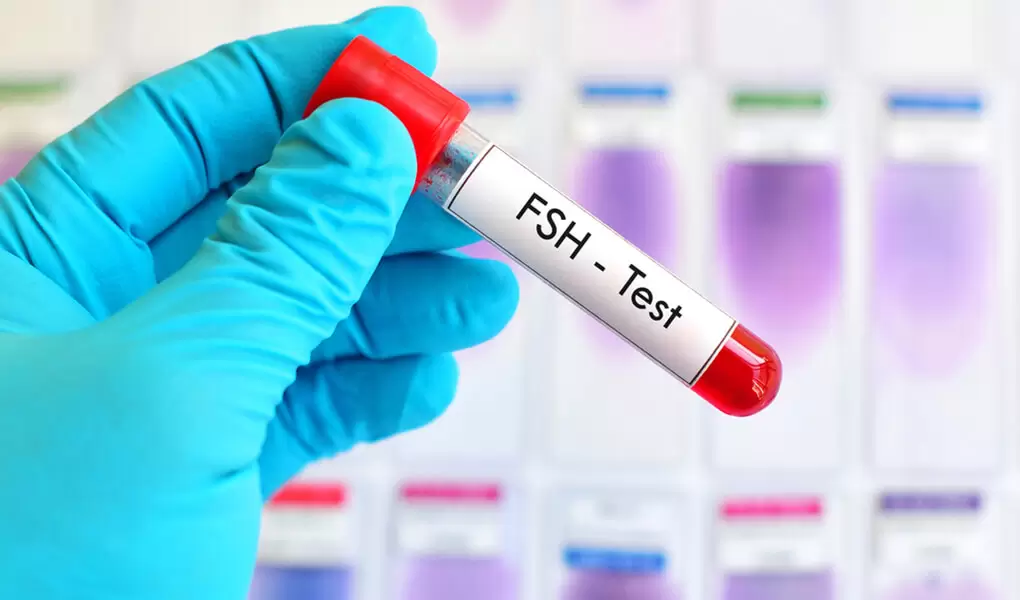
What Is FSH Hormone? What Is the Ideal FSH Level?

What Is FSH Hormone? What Is the Ideal FSH Level?
0

Before starting infertility evaluation or IVF treatment, couples are required to undergo several diagnostic tests. One of the most important of these tests is the FSH hormone test.
Below, you will find clear and medically accurate answers to all of these questions.

What Is FSH Hormone?

FSH (Follicle Stimulating Hormone) is a gonadotropin hormone released from the pituitary gland in the brain. It plays a crucial role in the reproductive systems of both women and men.

In women, FSH:

  • Stimulates the growth and maturation of ovarian follicles
  • Supports egg development
  • Promotes estrogen (estradiol) production
  • Regulates the menstrual cycle

In men, FSH:

  • Stimulates sperm production (spermatogenesis)
  • Acts on Sertoli cells in the testes
  • Supports normal testicular function

FSH works closely with luteinizing hormone (LH). Together, these hormones regulate gamete production and reproductive function.

Hormonal Structure of FSH

FSH belongs to the glycoprotein hormone family, along with LH and hCG.
These hormones consist of two subunits:

  • Alpha subunit: identical in FSH, LH, and hCG
  • Beta subunit: hormone-specific and responsible for biological function

The uniqueness of the beta subunit allows laboratories to measure FSH accurately.

What Is the FSH Test?

The FSH test measures the amount of follicle-stimulating hormone in the blood. It is usually performed as a blood test, as blood measurements provide more reliable and consistent results than urine testing.

FSH is rarely evaluated alone. Doctors often request additional hormone tests, including:

  • LH
  • Estradiol (E2)
  • AMH
  • Prolactin
  • TSH

Before the test, it is important to inform your doctor about medications you are using. Certain drugs may affect FSH levels, including:

  • Clomiphene
  • Birth control pills
  • Levodopa
  • Cimetidine

Why Is the FSH Test Requested?

The FSH hormone test is commonly used to investigate infertility and hormonal disorders.

In women, FSH testing is used to:

  • Evaluate ovarian reserve
  • Diagnose menstrual irregularities
  • Detect ovarian insufficiency
  • Assess menopausal transition
  • Support IVF treatment planning

In men, FSH testing is used to:

  • Evaluate sperm production disorders
  • Diagnose testicular insufficiency
  • Investigate low sperm count or azoospermia

What Is the Ideal FSH Level?

FSH levels vary depending on age, sex, and menstrual cycle phase. Therefore, results must always be interpreted within the appropriate clinical context.

FSH Levels in Women

  • Childhood (0–7 years): < 6.7 mIU/mL
  • Follicular phase: 3.1 – 7.9 mIU/mL
  • Ovulation phase: 2.3 – 18.5 mIU/mL
  • Luteal phase: 1.4 – 5.5 mIU/mL
  • Menopause: 30.6 – 106.3 mIU/mL

FSH Levels in Men

  • Childhood (0–7 years): < 6.7 mIU/mL
  • After puberty: 1.3 – 19.3 mIU/mL

What Is the Ideal FSH Level for Pregnancy?

FSH is a key marker of ovarian reserve.

  • FSH < 10 mIU/mL: generally associated with better fertility potential
  • FSH 10–15 mIU/mL: fertility potential begins to decline
  • FSH > 15 mIU/mL: significantly reduced chance of natural conception

As FSH rises, ovarian reserve typically declines. Higher FSH levels may indicate reduced response to fertility treatments, though pregnancy is still possible depending on individual factors.

What Does a Low FSH Level Mean?

Low FSH levels may indicate insufficient stimulation of the ovaries or testes.

In women, low FSH may cause:

  • Poor follicle development
  • Irregular or absent ovulation
  • Delayed puberty
  • Infertility

In men, low FSH may cause:

  • Reduced sperm production
  • Delayed puberty
  • Oligospermia or azoospermia

Low FSH may also be associated with:

  • Pregnancy
  • High prolactin levels
  • Eating disorders
  • Thyroid dysfunction
  • Pituitary disorders or trauma

What Does a High FSH Level Mean?

High FSH levels often indicate reduced gonadal function.

Common causes include:

  • Primary ovarian failure
  • Testicular failure
  • Menopause
  • Turner syndrome (women)
  • Klinefelter syndrome (men)

High FSH may also occur due to:

  • Chronic kidney disease
  • Liver disease
  • Testicular inflammation
  • Excessive alcohol use

How Is FSH Regulated?

FSH secretion is controlled by the hypothalamic–pituitary–gonadal axis.

  • The hypothalamus releases GnRH
  • GnRH stimulates the pituitary gland
  • The pituitary releases FSH and LH
  • Ovaries or testes produce estrogen, testosterone, and inhibin
  • These hormones provide negative feedback to regulate FSH levels

When the ovaries or testes fail to respond, feedback is lost and FSH levels rise.

How Can FSH Levels Be Reduced Naturally?

There is no guaranteed method to lower FSH without medical treatment. However, supportive lifestyle changes may help hormonal balance:

  • Stress reduction
  • Regular sleep patterns
  • Balanced nutrition
  • Light to moderate exercise

Medical treatment decisions should always be made by a specialist.

Frequently Asked Questions (FAQ)

What does FSH stand for?

FSH stands for Follicle Stimulating Hormone, a key hormone involved in reproduction.

Is high FSH bad for fertility?

High FSH may indicate reduced ovarian or testicular reserve, which can lower fertility potential.

Can you get pregnant with high FSH?

Yes, pregnancy is still possible, but chances may be lower depending on age and ovarian reserve.

When should FSH be tested?

In women, FSH is typically measured on day 2 or 3 of the menstrual cycle.

Does stress affect FSH levels?

Chronic stress may indirectly influence hormonal balance, including FSH.

Leave a Comment!

Your email address will not be published. Please fill in the required fields!


Let Us Call You

Let us call you as soon as possible regarding the issues you want to consult.

Let Us Call You


    What Is FSH Hormone? What Is the Ideal FSH Level?

    Ask the Doctor

      Ask the Doctor


      © 2010 - 2026 All rights reserved. | Design & Development

      Son güncelleme tarihi : 23.11.2025 17:24:19

      What Is FSH Hormone? What Is the Ideal FSH Level?

      Let Us Call You

      Phone numbers

        Or you can reach us at +90549 821 92 04.